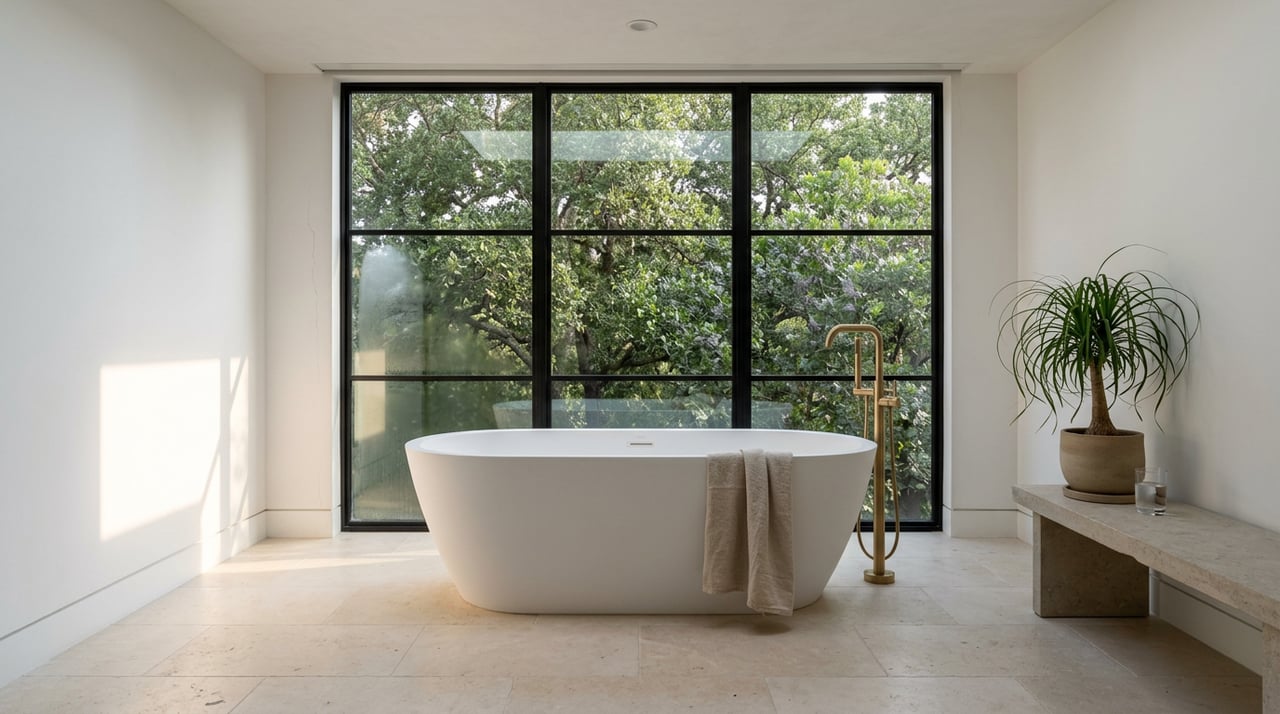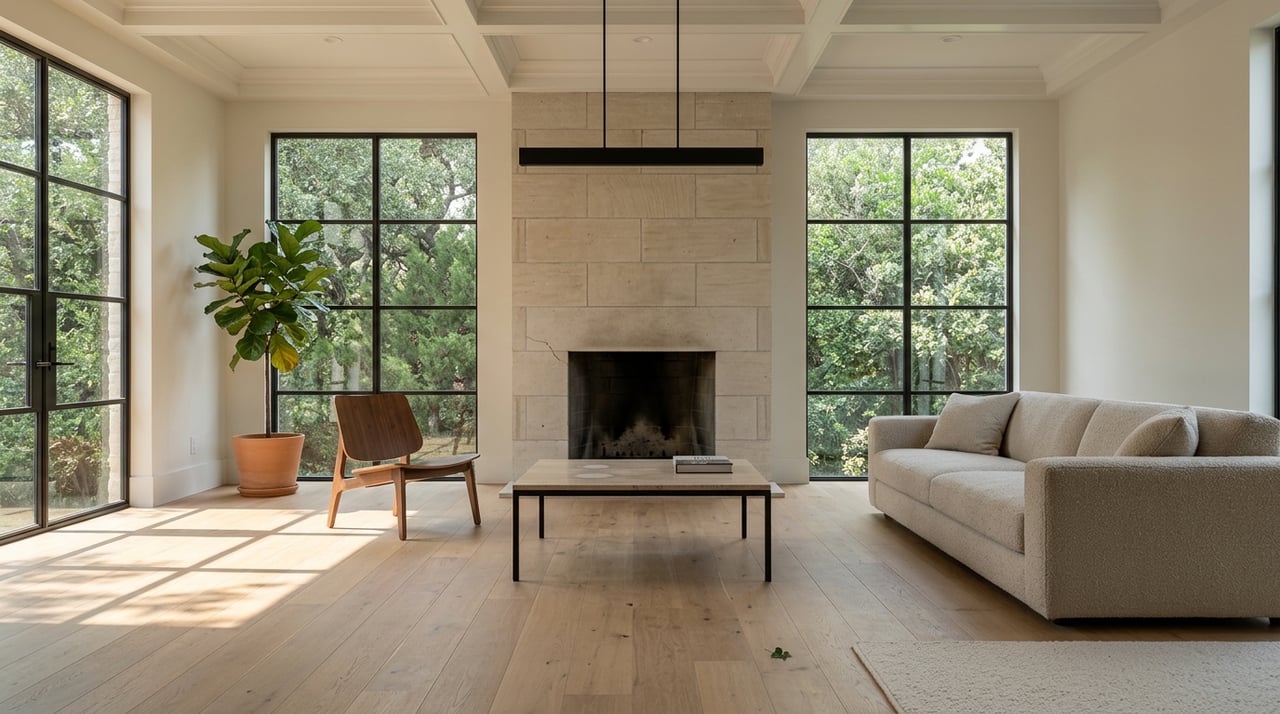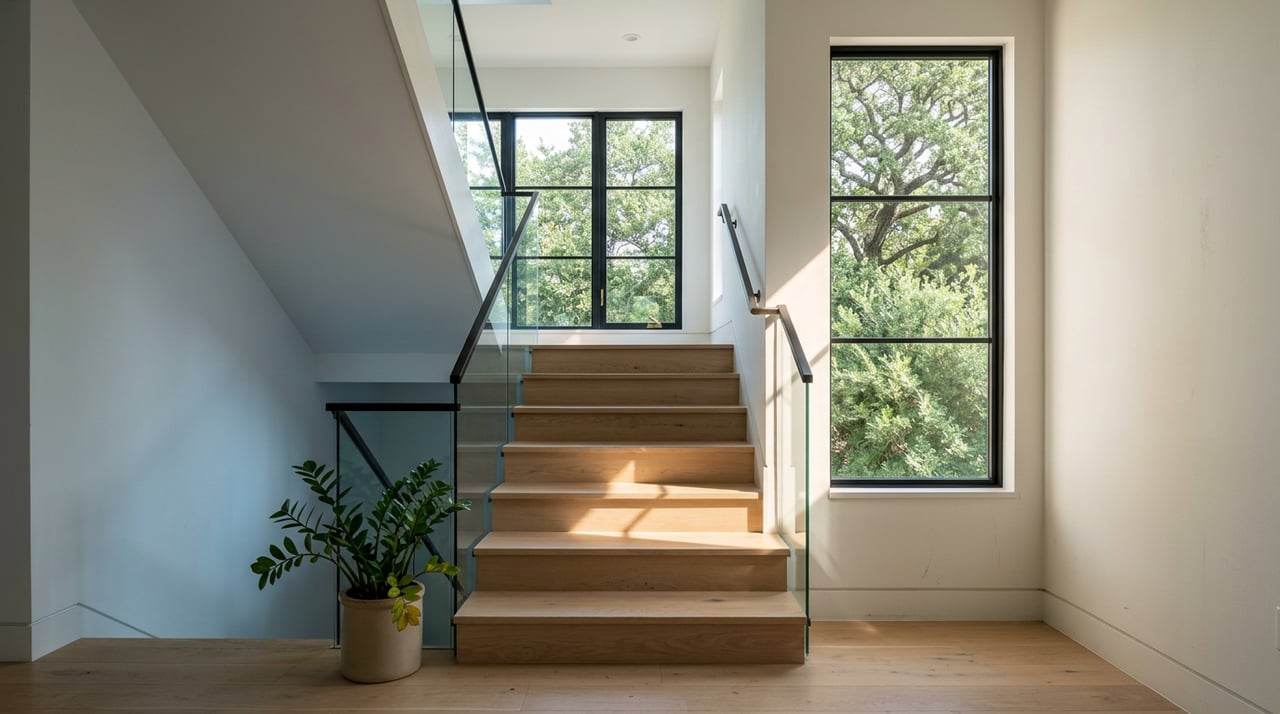
Two three-bedroom homes, priced within a few thousand dollars of each other, both listed with a Round Rock, Texas address. Similar square footage, similar lot, similar drive time to the Dell campus off I-35. Pull the estimated tax worksheet on each one and the numbers stop lining up. One carries an extra charge the other doesn't, often worth more than a car payment over a year, and neither the zip code nor the school district explains the gap, since both homes sit inside Round Rock ISD boundaries.
The difference usually lives inside a taxing entity that has nothing to do with the City of Round Rock. Ask Mike Petter, general manager of Brushy Creek MUD, what new residents get wrong about their own address, and his answer gets right to it: "That is just where the post office is," he told Community Impact back when the paper profiled the area's utility districts.
A Different Government Wearing the Same Return Address
A Municipal Utility District, or MUD, is a separate elected taxing authority created to fund water, sewer, and drainage infrastructure for land that wasn't inside a city's limits when a developer started building on it. The district issues bonds to pay for the pipes and lift stations up front, then levies its own property tax to pay those bonds back over time. That tax appears on the same county bill as your city and school district charges, but it comes from a board most homeowners never meet and rarely think to research before closing.
Round Rock has several of these, and they aren't hidden once you know to look. Round Rock MUD No. 1 didn't levy any tax at all before 2020. Round Rock MUD No. 2 shows up separately in Williamson County's own tax rate filings. Teravista, one of the area's most recognizable master-planned communities, actually runs on three separate MUDs, two inside Round Rock's extraterritorial jurisdiction and one inside Georgetown's, a structure that dates back to the community's founding in 1998. Farther northwest, the Highlands at Mayfield Ranch MUD covers newer construction along that corridor. Extraterritorial jurisdiction, or ETJ, is the key term here: it means the land is close enough to a city to be under some of its planning authority but isn't actually annexed into it, which is exactly why a separate district, not the city, ends up building and taxing for water and sewer service there.
That structural choice also shapes what a MUD does and doesn't pay for. In Teravista's case, the districts were deliberately kept narrow, covering only water, wastewater, and drainage, while the HOA, not the MUD, funds the community's pools, trails, and golf course. That separation matters if the city ever moves to annex the area, since a MUD focused purely on utilities is a cleaner handoff than one entangled with recreation assets.
What Actually Shows Up on the Bill
Here's where the comparison gets concrete. The City of Round Rock's own tax rate for fiscal year 2025-2026 is 37.2 cents per $100 of assessed value. Round Rock ISD's most recently adopted rate, for tax year 2025, runs $0.8931 per $100, split between $0.7101 for maintenance and operations and $0.1830 for debt service, and typically accounts for roughly half of a Round Rock homeowner's total bill. Combined with Williamson County's levy, a typical Round Rock property lands around $1.68 per $100 of taxable value, meaning a home near the county's median of about $420,000 owes roughly $7,051 a year before exemptions, based on figures compiled earlier this year.
| Taxing entity | Approximate rate per $100 | What it funds |
|---|---|---|
| City of Round Rock | 37.2 cents (FY2025-2026) | Streets, police, fire, parks |
| Round Rock ISD | 89.31 cents (tax year 2025) | Schools, debt service on school bonds |
| Williamson County | Rolled into combined ~$1.68 total | County services |
| MUD, where applicable | 25 cents to $1.40+ | Water, sewer, drainage bond repayment |
Read that last row again next to the city's own rate. A mature, nearly paid-off MUD might add a modest quarter on top of the base bill. A newer district still early in its bond schedule can charge more per $100 than the entire City of Round Rock does for police, fire, and street maintenance combined. On a $400,000 home, that gap between a MUD property and an identical non-MUD property typically runs somewhere in the $2,000 to $4,000 a year range, depending on the district's age and debt load. That's the number a listing price never shows you.
The Overlay Shrinks, Just Not on Your Timeline
MUD rates aren't fixed. As bonds get retired, districts lower their rates, sometimes for decades, until the debt is gone and the district can shrink to a minimal operations-only charge or dissolve into the city's utility system entirely. A district formed between 2015 and 2020 at a rate around 0.55% might already be down closer to 0.40% by 2026 and could approach 0.20% by 2030 if growth and repayment stay on schedule. The mechanism cuts both ways for a buyer: a home in an older, mostly-paid-off MUD may already be past its heaviest years, while a home in a brand-new section of a growing community, the kind still being actively marketed and built out, is almost certainly sitting at or near that district's peak rate right now.
This is why asking for "the MUD rate" isn't enough. The better question is where that district sits in its bond schedule, since two homes with the same rate today can be headed in opposite directions over the next decade.
The Bigger Exemption Doesn't Touch This Line
Texas voters raised the general school district homestead exemption from $100,000 to $140,000 when they passed Proposition 13 in November 2025, a real cut to the largest single piece of most Round Rock tax bills. But that exemption applies specifically to the ISD portion of your taxable value. It does nothing to a MUD's rate or taxable base. So even as homeowners across the county see their school tax line shrink, the gap between a MUD home and a non-MUD home stays exactly where it was, because the exemption that just grew doesn't reach the district that's driving the difference.
There's a second wrinkle worth knowing if you're buying new construction inside one of these communities. Texas caps how fast a homesteaded property's taxable value can rise each year at 10%, but that cap doesn't apply in your first year of ownership. Williamson County's 2025 reappraisal cycle showed average value increases of 6.3% countywide, but homes built since 2021, the exact vintage of most active MUD-district construction, averaged 19.6%. A buyer closing on new construction inside a young district gets the full force of that first appraisal with no cap to soften it, on top of a MUD rate that's likely at its highest point in the district's life.
Before You Compare Two "Round Rock" Listings
A few checks matter more here than in most tax conversations:
- Pull the Williamson Central Appraisal District parcel record for the exact address, not the neighborhood name, and look at the full list of taxing units attached to it.
- Ask the listing agent or seller for the specific MUD's current rate and, if available, its rate history over the past five years, not just this year's snapshot.
- If the property sits outside city limits, check whether an emergency services district also applies. Most run 8 to 10 cents per $100 for fire coverage, though rates vary by district.
- Mark May 15 on your calendar every year if you own in Williamson County. That's when the appraisal protest window typically closes, and a successful protest lowers your base going forward, not just this year's bill.
None of this means a MUD is a red flag on its own. Financing infrastructure through district bonds is part of how developers avoid the upfront impact fees cities charge, which is part of why new construction in these communities can be priced competitively against similarly sized homes elsewhere. The point isn't to avoid these neighborhoods. It's to know which government is actually billing you before you compare two houses that both happen to say Round Rock.
Quick Answers
Does the new homestead exemption lower my MUD tax? Not automatically. The $140,000 exemption from Proposition 13 applies to the school district portion of your bill. Whether a specific MUD offers its own separate exemption is a decision made by that district's board, so ask the district directly rather than assume.
Do MUD taxes ever go away completely? They can. As a district retires its bond debt, its rate typically declines, and some districts eventually dissolve into a city's utility system once the debt is paid and annexation makes sense for both sides.
How do I find out if a specific address is in a MUD? Search the parcel on the Williamson Central Appraisal District site. Every taxing unit tied to that property, including any MUD, will show up in the record.
If you're comparing homes across Round Rock's different corridors and want someone to pull the actual taxing-unit records before you write an offer, Briana Headley can walk through the numbers with you property by property. Let's Connect.